How AI Handles Hospital Appointment Calls Without Adding Staff
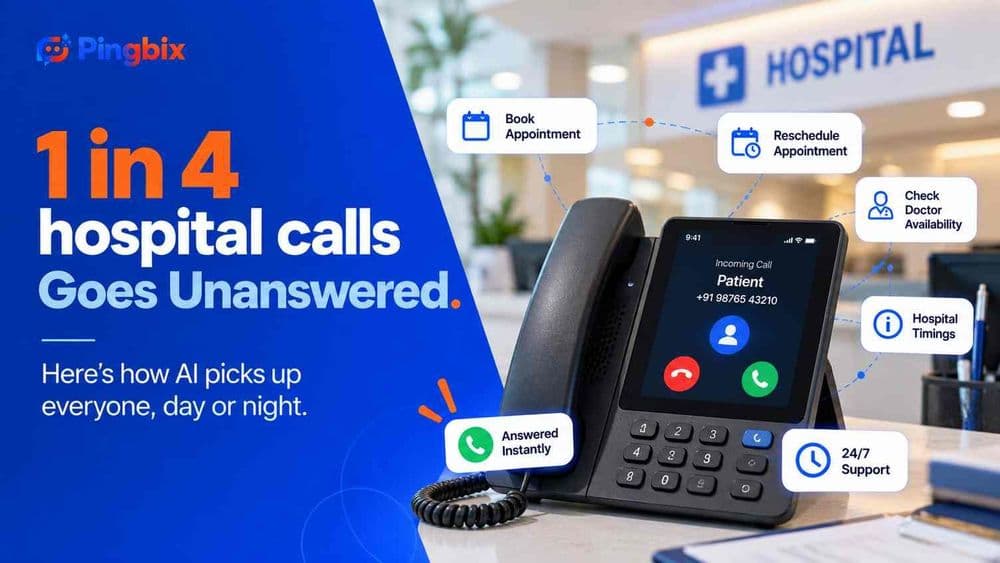
A hospital front desk gets the same ten questions, forty times a day, "Is Dr. Rao available Friday?" "Can I move my slot to evening?" "Are you open on Sunday?" None of it is complicated. All of it takes a person to answer. Here's what happens when an AI handles it instead.
What patients are actually calling about
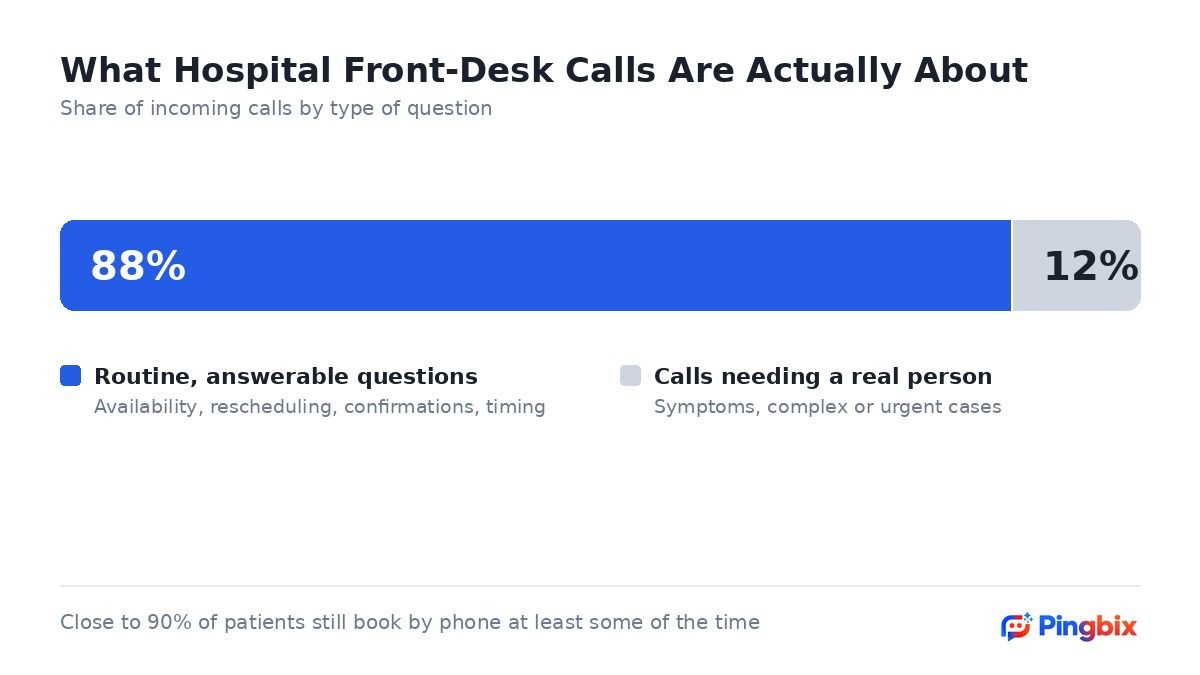
Most hospital calls aren't complicated medical conversations. They're logistics. Availability, timing, rescheduling, confirmation. The kind of question that has a clear, factual answer sitting in a scheduling system somewhere, if only someone had a free hand to check it.
That's not a small slice of hospital communication either. Close to 90% of patients still book appointments by phone at least some of the time, phone hasn't been replaced by apps and portals the way a lot of healthcare software pitches assume. Which means the front desk isn't a side channel, it's still one of the main doors into the hospital.
Why hospitals still lose these calls
Staff shortages
A receptionist can be on a call, checking in a walk-in patient, or updating a file, but not all three at once. Industry-wide, medical practices report missing somewhere around one in four incoming calls, and that's with dedicated front-desk staff already in place. A single-receptionist desk is even more exposed. And the ones that do reach voicemail don't necessarily wait around either, a majority of patients hang up without leaving a message at all.
The peak-hour crunch
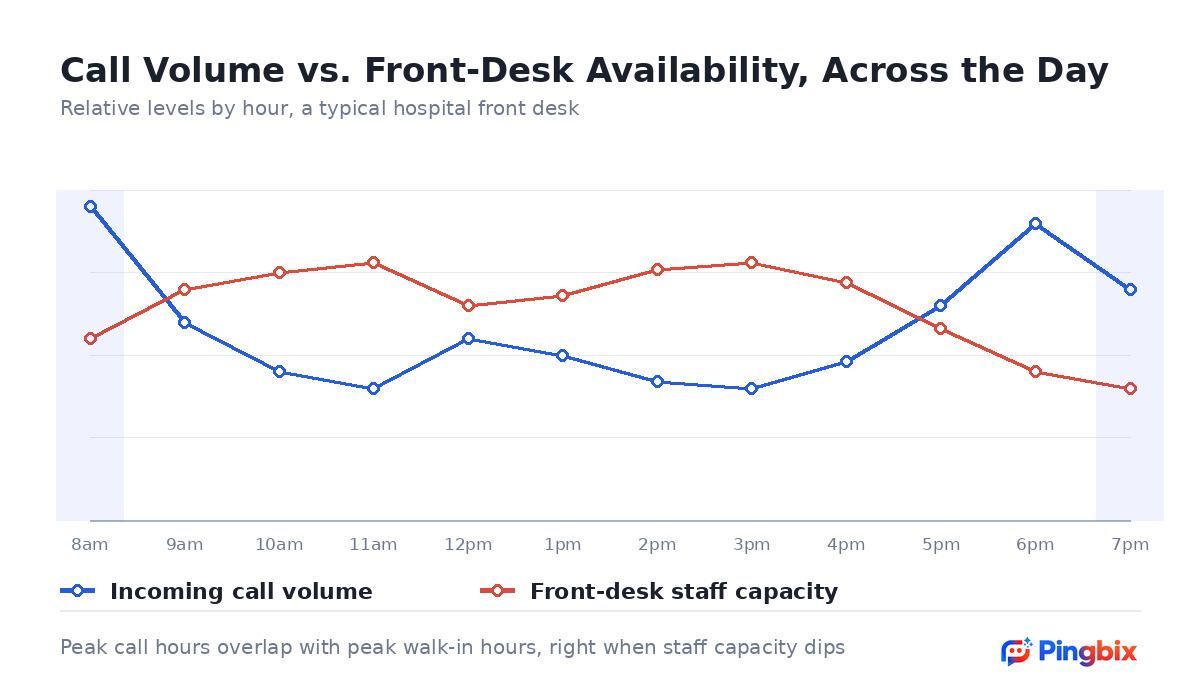
Call volume isn't spread evenly through the day. A meaningful share of daily calls cluster in the first and last hour of operating hours, exactly when the desk is also busiest with people physically walking in. That overlap is where calls go unanswered most often, not because staff aren't working hard enough, but because two things are competing for the same set of hands at the same time.
After-hours gaps
A significant share of appointment demand shows up outside standard hours entirely, patients booking or trying to reach someone well after the desk has closed for the day. When those calls hit voicemail, most callers don't leave a message. They don't call back tomorrow either. They call the next hospital on their list.
How Pingbix AI handles it
Instant pickup, every time. No ring, no hold music, no "please wait, all our lines are busy." The call gets answered the moment it comes in, whether that's during the morning rush or at eleven at night.
A conversation, not a menu. Patients ask their question the way they'd ask a person, "can I move Friday's appointment to evening", and get an answer back in kind, not a maze of "press 1 for this, press 2 for that."
Multilingual by default. A patient more comfortable in Telugu, Hindi, or Tamil gets the conversation in that language, without needing a specific staff member on shift who happens to speak it.
Synced with the actual schedule. Availability, rescheduling, and confirmations pull from the real scheduling system in the moment, not a stale list someone updates once a day. If a patient describes something that genuinely needs a person, a symptom, a complex case, a same-day urgent request, the call is handed to staff with the context already captured, the same escalation logic we've written about in AI voicemail detection and smart retry.
This fits into a pattern we've covered before too, in how clinics use AI to follow up after every visit: the calls that matter most are often the simplest ones nobody has time to make consistently. Appointment calls are the same problem from the other direction, simple, repetitive, and exactly what falls through the cracks when a desk is short-staffed.
What this looks like in practice
A patient calls at 7 PM, after the desk has closed for the day, asking to move Friday's 10 AM appointment to the evening instead. The AI checks the schedule, finds an open 6 PM slot with the same doctor, confirms it with the patient, and updates the booking. No voicemail, no callback the next morning, no patient who gave up and called somewhere else.
Another patient calls during the morning rush asking whether the hospital is open on Sunday for a follow-up. A thirty-second answer, handled while the front desk is mid-conversation with someone standing right in front of them.
Curious what this would actually sound like for your hospital's own call volume, not a demo script, but something built around your actual scheduling system and peak hours?
Frequently asked questions
Does this replace the front desk staff? No. It handles the repetitive scheduling questions that eat up staff time, so the people at the desk can focus on patients standing in front of them and calls that genuinely need a person.
What happens if a patient describes a symptom or something urgent? The call is handed to staff immediately, with everything the patient already said, so they don't have to repeat themselves.
Can it actually book into our existing scheduling system? Yes. It works against the same scheduling system your staff already uses, so availability and bookings stay accurate in real time.
Does it work outside office hours? Yes, that's one of the main gaps it closes. Calls get answered at any hour, not just during staffed shifts.