AI

Latest posts in AI

Seasonal Marketing in 2026: Turning Moments into Meaningful Customer Journeys

Seasonal Marketing in 2026: Turning Moments into Meaningful Customer Journeys

March 5, 20263 min read

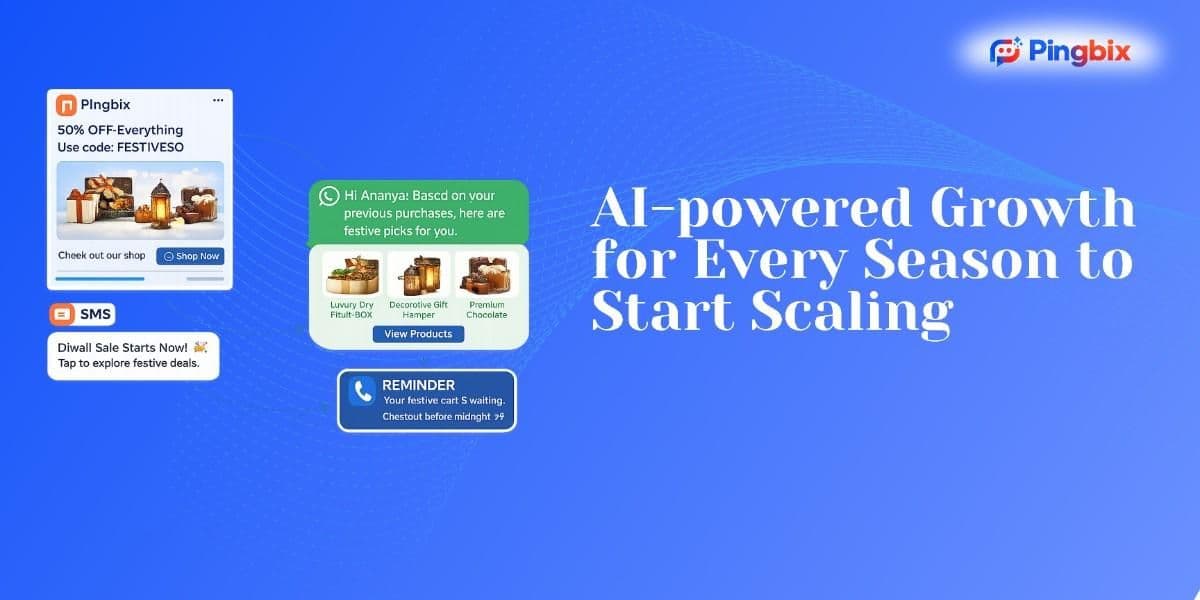
Ramadan, Diwali, Black Friday, or Women’s Day - the shopping rush has evolved. In 2026, catching a customer’s eye during a holiday isn’t just about showing up; it’s about context, conversation, and connection. At **Pingbix**, we’ve seen that the most successful brands don’t just mark their calendars - they orchestrate intelligent customer journeys using **Agentic AI and Omnichannel Communication**. Here’s your roadmap to seasonal marketing excellence. ## Real-World Examples of High-Impact Seasonal Campaigns To win during seasonal peaks, brands must go beyond simple promotions. The most successful campaigns tap into emotion, convenience, and contextual engagement. Let’s explore how modern brands are using technology to transform seasonal marketing. ### The “Anti-Stress” Assistant: AI Gift Concierges During the hectic December holiday rush, several home décor brands are moving away from static product catalogs and introducing AI-powered gift assistants. Instead of browsing endless pages, customers can interact with a digital assistant that recommends gifts based on previous purchases, style preferences, or even images of their home interiors. **The Pingbix Angle** This is a perfect example of Agentic AI in action. Instead of making customers spend time searching, AI simplifies decision-making and moves them from product discovery to WhatsApp checkout within seconds. **The Lesson** During high-traffic seasons, the brand that saves customers the most time wins the sale. ### Contextual Timing: Ramadan-Based Smart Notifications Food delivery and quick commerce platforms have mastered the art of **contextual messaging**. During Ramadan, notifications are often timed according to key moments of the day. Messages sent before sunrise focus on energy and preparation, while evening notifications emphasize celebration and indulgence. **The Pingbix Angle** This demonstrates the power of **Contextual Routing**. When messages align with the real-world environment and emotional state of the user, engagement rates increase significantly. **The Lesson** Your AI system should understand **when to communicate and what tone to use** based on the user’s real-world context. ### The “Invisible” Showroom: Augmented Reality Experiences Retail brands are increasingly using **Augmented Reality (AR)** to bridge the gap between digital discovery and real-world experience. Customers can visualize products in their own environment before making a purchase. For example, shoppers can see how furniture fits inside their home or how decorations match their festive setup. **The Pingbix Angle** When combined with **RCS Rich Messaging**, brands can send immersive experiences directly inside the messaging channel. Customers can explore products and complete purchases through **In-Chat Payments**, reducing friction in the buying journey. **The Lesson** The shorter the distance between **“I want this” and “I bought this,”** the higher your conversion rate. ## Why You Need a Dedicated Seasonal Marketing Strategy Seasonal marketing is more than a promotional tactic - it’s a strategic growth opportunity. Whether you’re a global brand or a growing business, seasonal moments unlock powerful advantages. ### Capture Seasonal Excitement Every season carries a unique emotional energy. Whether it’s festive celebrations or major sales events, audiences are already primed to engage. Seasonal campaigns allow brands to align with that emotional momentum so messages feel timely rather than intrusive. ### Increase Brand Visibility Creative and visually engaging campaigns naturally stand out in crowded inboxes and notification feeds. Using tools like RCS carousels, interactive WhatsApp bots, and personalized messaging ensures your brand becomes part of the seasonal conversation instead of getting lost in the noise. ### Drive Purchase Intent Consumer behavior during seasonal periods shows clear buying intent. In fact, 48% of shoppers now trust AI to help them track and manage their orders. Brands that offer a seamless purchase experience - such as in-chat payments or one-click checkout - gain a major advantage. ### Strengthen Emotional Connection Seasonal campaigns tap into traditions, celebrations, and shared experiences. By acknowledging these moments in meaningful ways, brands build deeper emotional relationships with customers. Over time, this connection leads to loyalty, repeat purchases, and brand advocacy. ## How to Create a Seasonal Campaign: The Pingbix Playbook Building a successful seasonal campaign requires strategic planning, customer insights, and the right communication tools. Here’s how to do it effectively. ### Understand Your Audience Seasonal marketing works best when it resonates with your audience’s behavior and expectations. Use your **Customer Data Platform (CDP)** to analyze past interactions and personalize campaigns based on: * Geographic location * Purchase history * Communication preferences * Previous seasonal behavior Ask key questions such as: * Do customers shop early or last minute? * Which channels do they engage with the most? These insights help you deliver the right message at the right time. ### Plan Ahead and Build Momentum Successful seasonal campaigns rarely happen overnight. Start planning 1–3 months in advance and map your complete Omnichannel Journey. Example channel strategy: * **Email:** Long-form storytelling, gift guides, and promotions * **WhatsApp / RCS:** Rich media messages and product carousels * **SMS:** Flash sales, urgent reminders, and shipping deadlines Coordinating these channels ensures consistent messaging throughout the customer journey. ### Personalize the Message Generic messages rarely perform well during busy shopping seasons. Instead, segment your audience and tailor communication accordingly. For example: Customers who purchased winter apparel last year may receive **early-access offers**, while frequent buyers might get **VIP discounts through personalized WhatsApp campaigns**. Personalization significantly increases engagement and conversion rates. ### Create Urgency Without Pressure Urgency is a powerful motivator when used authentically. Brands can use **Agentic AI** to trigger messages like: * Low inventory alerts * Limited-time offers * Countdown timers for seasonal deals However, authenticity matters. Modern customers can easily recognize artificial urgency. Focus on transparent messaging that adds value rather than pressure. ## Checklist: Get Started with Your Seasonal Campaign Before launching your campaign, review this quick checklist: * Identify key holidays aligned with your brand values * Segment audiences based on past seasonal behavior * Select the right communication channels * Automate engagement flows using AI * Test links, visuals, and messaging before peak season A well-prepared campaign ensures smoother execution during high-demand periods. ## Make Every Season Count with Pingbix Delivering seamless experiences across multiple channels requires intelligent orchestration. That’s where Pingbix comes in. Our **AI-driven omnichannel communication platform** helps businesses simplify, scale, and personalize seasonal campaigns from a single centralized system. With Pingbix, brands can engage customers through **SMS, WhatsApp, RCS, Email, and Voice**, all while leveraging AI automation and real-time analytics. Ready to turn the 2026 shopping season into your biggest growth engine?🚀 Connect with us today.
The Agentic AI Revolution: Why Pingbix is Positioned to Lead the Next Wave of Customer Engagement

December 10, 20253 min read

### **The Moment We've Been Waiting For** Today marks a watershed moment for the AI industry. The Linux Foundation just announced the formation of the Agentic AI Foundation (AAIF), bringing together giants like OpenAI, Anthropic, Google, Microsoft, AWS, and Block to establish open standards for autonomous AI systems. But here's what this means for you: The era of isolated, single-channel customer engagement is ending. Agentic AI will soon power autonomous agents that work across WhatsApp, SMS, RCS, email, voice, and beyond—seamlessly, without boundaries. And if you've been following our journey at Pingbix, you already know we've been building exactly for this moment. ### **What Just Happened? (And Why It Matters)** The Agentic AI Foundation introduced three critical open-source projects: - **Model Context Protocol (MCP) **— A standardized way for AI models to connect with external tools and data sources - **AGENTS.md **— An open format specification for giving AI agents consistent, project-specific guidance - **goose** — An open-source, local-first AI agent framework What makes this revolutionary? **Interoperability**. For the first time, AI agents from different vendors can work together seamlessly. An agent built with one framework can instantly use tools and data sources from another vendor's ecosystem. Previously, enterprises faced a painful choice: lock into a single vendor's proprietary solution or build custom integrations from scratch. The AAIF changes that equation forever. ### **The Market Is Already Moving (And Growing Fast)** The numbers tell the story: 96% of technology leaders expect agentic AI adoption to accelerate at "lightning speed" (IEEE, November 2025) 48% of enterprises are already running agentic systems in production, not just testing The agentic AI market is projected to grow from $7 billion in 2025 to $93 billion by 2032—a 44.6% compound annual growth rate Translation: This isn't hype. This is the mainstream. In July 2025, AWS launched an AI agents marketplace with 900+ pre-built agents. Google, Microsoft, and Salesforce followed suit within weeks. These marketplaces transformed agent deployment from months of engineering to days of configuration. But there's a critical gap in the market:** Most of these agents operate in isolation. They work within a single channel or platform—a CRM, a support system, a sales app. They don't orchestrate across the communication channels where customers actually live. ** That's where Pingbix enters the picture. ### **Where Pingbix Fits Into the Agentic AI Future** At Pingbix, we're obsessed with one thing: delivering customer engagement outcomes through every communication channel that matters—WhatsApp Business API, RCS, SMS, Email, Voice, and more. We've been building the infrastructure for omnichannel autonomous agents since day one. Here's how we're positioned: ### **1. Omnichannel Foundation** Unlike point solutions that work on a single channel, Pingbix operates across RCS, WhatsApp, SMS, Email, and Voice—all unified under one platform. When the AAIF's open standards enable agents to "choose" their execution channel, Pingbix becomes the natural orchestration layer. Today, 350+ businesses trust Pingbix to manage billions of conversations across these channels. Tomorrow, those same businesses will layer agentic AI on top. ### **2. AI-Native Communication** We've already embedded AI into the DNA of Pingbix. Our platform supports: - **AI-powered personalization** — Segment audiences and send resonant messages - **Intelligent chatbots** with multilingual support, seamless agent handoff, and continuous learning - **Fallback flows** — When AI isn't confident or a channel fails, the system automatically cascades through SMS → Voice → Human Agent - **Real-time analytics** — Monitor agent performance, query resolution rates, and campaign ROI across all channels This isn't theoretical AI. It's production-grade, battle-tested systems handling real customer journeys at scale. ### **3. Enterprise-Grade Integration Ecosystem** Agentic AI thrives on connectivity. Pingbix integrates seamlessly with: - **CRMs & Marketing Automation: **HubSpot, Salesforce, Zoho, Pabbly, LeadSquared - **Data Platforms: **MoEngage, CleverTap, WebEngage - **Business Systems:** Custom APIs, webhooks, and real-time event streams When autonomous agents need to pull customer data, update CRM records, or trigger downstream workflows, Pingbix is the connective tissue. ### **4. Compliance & Governance** The AAIF's focus on open standards includes governance frameworks. Pingbix has years of experience navigating regulatory requirements across 200+ countries—WhatsApp Business API guidelines, SMS compliance, RCS security, GDPR, DPA, and more. As agentic AI scales into regulated industries (fintech, healthcare, insurance), governance and compliance aren't afterthoughts. They're foundational. Pingbix has this built in. ### **Real-World Agentic AI on Pingbix Today** Here's what autonomous agents are already doing on our platform: - **Abandoned Cart Recovery** — An AI agent detects when a customer adds items to their cart but doesn't complete purchase. It sends a personalized WhatsApp message. If no response, it falls back to SMS. If still no response, it escalates to voice. Each step is intelligently timed and personalized. - **Lead Qualification & Booking **— An AI agent engages website visitors via WhatsApp, qualifies their interest through conversation, answers FAQs, and books meetings—all without human intervention. Qualified leads sync directly to HubSpot or Salesforce. -** Intelligent Support Automation** — An AI agent handles common support questions across WhatsApp, SMS, and voice. For complex issues, it seamlessly transfers to a human agent with full context. Customers never repeat information. - **Predictive Customer Engagement **— Our AI analyzes customer behavior and purchase history to send proactive, personalized messages recommending products or reminding about renewals. RCS carousels showcase products with rich media. SMS provides fallback reach. The common thread? These agents don't work in silos. They orchestrate across channels, connect to CRMs, learn from interactions, and adapt in real time. ### **What's Next for Agentic AI + Pingbix** The Agentic AI Foundation's open standards will accelerate the market in three ways: - **Standardization** — The AGENTS.md format and MCP protocols eliminate proprietary lock-in. Agents will become more portable and composable. - **Proliferation** — With lower barriers to agent creation and deployment, thousands of specialized agents will emerge—vertically focused agents for healthcare, fintech, retail, logistics, and more. -** Orchestration **— The real competitive moat won't be building agents. It'll be orchestrating them effectively across channels, data sources, and workflows. That's where Pingbix thrives. We're already planning: - **Native agent builder **— Drag-and-drop agentic AI creation, no coding required - **AGENTS.md integration** — Direct support for open specification guidance - **MCP server support** — Seamless connection to any MCP-compatible data source or tool - **Multi-agent orchestration** — Coordinate multiple AI agents across channels to solve complex customer journeys - **Agentic analytics** — Deep insights into agent performance, hallucination rates, and customer satisfaction #### **The Invitation** If you're a Pingbix customer, you're already in the right place. We're not chasing agentic AI—we're building it into the foundation of customer engagement. If you're not yet a Pingbix customer, now is the time to explore. The rules of customer engagement are being rewritten. Omnichannel, AI-native, agent-ready communication isn't a nice-to-have. It's becoming the standard.

The Path to Conversational AI Excellence: Are Businesses Ready?

March 25, 20253 min read

The world of conversational AI has come a long way. From simple, rule-based chatbots with pre-scripted messages to sophisticated AI-powered systems that can communicate like humans, the evolution has been remarkable. But although the technology has developed, its integration in businesses is patchy. Most brands are saying they are leveraging AI, but few have embedded conversational AI in their customer experience (CX) plans. So, what’s holding them back? ##**The AI Adoption Gap: Why Brands Are Falling Behind** According to industry research, 70% of brands claim to use AI in some form - whether for data automation, translation, or generative AI-powered chatbot responses. But only 16% of enterprise brands are actually using conversational AI to improve CX. This gap underscored a key problem: too many companies do not have Conversational CX Maturity. Inadequate integration of tools, siloed data, technical constraints, and poor conversational design hinder brands from providing smooth AI-driven experiences. Strategic planning is needed to implement conversational AI, yet adoption is slower than expected- despite the market’s rapid expansion. The Growing Market for Conversational AI The global conversational AI market is currently valued at $13.6 billion (2024) and is expected to grow by nearly 30% annually over the next decade (IMARC Research). North America has the largest share of 28.6%, powered by AI giants such as Google, Microsoft, OpenAI, and Amazon. APAC, Europe, and Latin America are closing the gap, driven by increasing AI use in customer service, healthcare, finance, and e-commerce. The growing number of sophisticated AI chatbots strongly indicates that conversational AI is not only for large companies anymore - even mid-sized companies are now investigating how it can be used to enhance CX. AI-Powered CX: The Technologies Behind Smarter Conversations To truly harness conversational AI, brands need to move beyond static chatbot responses. Natural Language Processing (NLP) and Machine Learning (ML) are key to enabling: Contextual understanding – AI can interpret tone, intent, and past interactions. Personalized experiences – Chatbots can recommend products, offer solutions, and proactively engage customers. Continuous learning – AI systems refine their responses over time, ensuring better accuracy and relevance. Through the use of conversational AI within their operations, companies are able to transform customer interactions - offering instant, intuitive, and personalized experiences at scale. Why More Businesses Are Investing in Conversational AI Several factors are driving AI adoption: ###**1. Demand for Instant, Personalized Customer Support** Consumers expect businesses to be reachable 24/7, across various channels, with instant and relevant responses. AI chatbots provide effortless, real-time conversations without burdening support teams. ###**2. Cost Reduction and Scalability** Routine inquiries automated with AI-powered assistants save operational expenses while enabling companies to manage large volumes of interactions effectively. This is especially useful during peak periods or for businesses with high customer support requirements. ###**3. AI-Driven Personalization and Engagement** With AI, brands can: - Send customized product suggestions based on past purchases. - Proactively contact customers at risk of churn. - Automate payment reminder notifications or reminders for sales. This level of proactive engagement fosters stronger customer relationships and brand loyalty. ##Future Trends Shaping Conversational AI ###**1. Multimodal AI Interactions** AI is evolving beyond text-based chatbots. Voice, image, and gesture-based interactions are becoming more intuitive, allowing brands to create richer, more natural customer experiences. ###**2. Emotionally Intelligent AI** Advanced AI systems can detect sentiment through tone and language, enabling more empathetic interactions. This is particularly useful in healthcare, finance, and customer service, where sensitive inquiries require a thoughtful approach. ###**3. Smarter AI-Powered Search** Conversational AI is transforming the way users search for information. Rather than clicking through several links, customers can request direct, contextual responses from AI-powered assistants (such as ChatGPT or Alexa) - accelerating their decision-making process. ###**4. Industry-Specific AI Solutions** Different industries require different conversational AI implementations: Retail companies use AI for marketing automation and virtual shopping assistants. Telecom companies employ AI chatbots for technical support and customer inquiries. Finance & healthcare depend on AI-powered virtual assistants for trusted, dependable customer engagement. A customized conversational AI approach ensures that businesses get more value from their AI investments. ### **5. Omnichannel AI Integration** Consumers interact with brands across numerous digital touchpoints - WhatsApp, RCS, live chat, voice assistants, etc. An uninterrupted AI-enabled experience across these channels promises consistency, quicker resolutions, and improved CX. ## **Conversational AI: A Strategic Business Asset** As conversational AI adoption grows, businesses must balance automation with human expertise. AI should enhance, not replace, human interactions, ensuring customers receive both speed and personalization. At Pingbix, we help brands integrate conversational AI into their communication stack, providing intelligent, scalable, and personalized customer engagement solutions. The future of customer communication is AI-driven, seamless, and highly personalized. Are you ready to take the next step?

AI Chatbots Revolutionizing Fintech Customer Experience

AI Chatbots Revolutionizing Fintech Customer Experience

October 24, 20243 min read

In today’s fast-paced fintech landscape, customer expectations have never been higher. Clients demand quick responses, personalized solutions, and seamless interactions—all while maintaining the highest standards of security. For fintech companies, delivering this level of service consistently can be challenging. That’s where **AI-powered chatbots** come into play. These intelligent systems are transforming the customer experience, making interactions more personalized, efficient, and secure. From instant responses to complex financial queries, **AI chatbots** can manage a wide range of customer needs, saving time, reducing operational costs, and improving overall satisfaction. Here’s how AI-powered chatbots are changing the game for fintech companies. ## The Power of AI in Fintech AI chatbots are more than just automated responders—they are sophisticated tools capable of understanding and processing large volumes of data in real time. This allows them to offer: - **Instant Support**: In the financial industry, where speed is crucial, chatbots provide customers with 24/7 support. Whether a customer needs to check their account balance, request transaction details, or seek guidance on investment options, chatbots can handle these tasks instantly and accurately. This immediate assistance enhances the customer experience by eliminating wait times and offering quick resolutions. - **Personalized Financial Advice**: Fintech companies have access to a wealth of data on their customers’ spending patterns, investment behavior, and financial goals. AI chatbots use this data to offer personalized financial advice tailored to each customer’s unique needs. Whether it’s suggesting savings plans, identifying investment opportunities, or recommending budgeting tools, chatbots can provide relevant and timely guidance that adds real value to the customer’s financial journey. - **Enhanced Engagement**: Chatbots foster deeper customer relationships by offering engaging interactions. Through **WhatsApp Business API**, for example, fintech firms can use chatbots to send notifications, reminders, and personalized messages directly to their customers. This not only keeps clients informed but also strengthens customer loyalty by creating an open line of communication that feels personal and relevant. ## Streamlining Operations and Reducing Costs For fintech companies, the operational benefits of AI chatbots extend far beyond customer service. Chatbots help streamline backend processes by automating repetitive tasks and reducing the burden on human agents. This can range from handling frequently asked questions and sending payment reminders to processing account inquiries and assisting with onboarding new clients. By offloading these tasks to AI-powered systems, companies can: - **Improve Efficiency**: With chatbots managing routine inquiries, human staff can focus on more complex, high-value interactions. This improves overall efficiency and ensures that the company can scale its services without compromising on quality. - **Reduce Costs**: Automated chatbots help fintech firms significantly cut operational costs. By reducing the need for large customer support teams and eliminating manual workflows, companies can operate more efficiently while maintaining high levels of customer satisfaction. The ROI on chatbot technology can be immense, especially for growing fintech companies that need to keep up with an expanding customer base. ## Enhancing Security and Fraud Detection In the fintech world, security is paramount. Customers trust these platforms with sensitive financial data, and any breach of this trust can have severe consequences. **AI chatbots** play a critical role in ensuring security by: - **Detecting Fraud**: Chatbots are equipped with advanced algorithms that can detect unusual activity on a customer’s account. If a transaction appears suspicious, the chatbot can flag it for review or automatically notify the customer, enabling swift action. This proactive approach helps prevent fraud and protects both the customer and the company from potential losses. - **Verifying Identity**: Through integrations with **WhatsApp Business API** and other platforms, chatbots can implement multi-factor authentication to verify a customer’s identity before processing transactions or providing sensitive information. This adds an extra layer of security, ensuring that only authorized users have access to critical account details. ## Enhancing the Customer Journey with AI-Powered Automation AI chatbots do more than just answer questions—they actively enhance the customer journey by automating essential touchpoints along the way. From onboarding new users to assisting with investment advice, chatbots provide consistent, reliable, and personalized support at every stage of the customer lifecycle. By automating tasks like payment reminders, transaction updates, and account notifications, chatbots ensure that customers are always kept informed, improving transparency and trust. They can even assist with complex financial tasks, like calculating loan options or providing real-time updates on stock market changes, giving fintech customers more control over their finances. ## Why Choose Pingbix? Pingbix is at the forefront of helping fintech companies harness the full potential of **AI chatbots**. Our solutions are designed to streamline customer interactions, improve operational efficiency, and enhance security. By integrating AI chatbots with platforms like **WhatsApp Business API**, we help fintech firms deliver faster, more secure, and personalized services that exceed customer expectations. At Pingbix, we believe that AI is the key to transforming the fintech industry, empowering companies to scale their services and deliver unparalleled customer experiences. With our chatbot solutions, fintech companies can stay ahead of the competition, offering the kind of personalized, secure, and efficient service that today’s customers demand.

AI in Contact Centers: Enhancing Experiences and Ensuring Data Privacy through CPaaS

AI in Contact Centers: Enhancing Experiences and Ensuring Data Privacy through CPaaS

September 11, 20243 min read

Customer expectations are higher than ever. They demand fast, personalized, and seamless service, which puts immense pressure on contact centers to deliver. To meet these demands, businesses are increasingly turning to AI-driven solutions. When combined with Communication Platform as a Service (CPaaS), AI not only elevates customer experiences but also ensures seamless, secure communication across channels. However, as AI grows more sophisticated, the challenge of protecting customer data becomes paramount. Let’s explore how CPaaS, powered by AI, enhances customer service while safeguarding data privacy. ## The Role of CPaaS in AI-Driven Contact Centers CPaaS offers businesses the flexibility to integrate real-time communication capabilities like messaging, voice, and video into their applications without needing to build complex backend infrastructure. When paired with AI, it enables a dynamic, multi-channel approach that revolutionizes how contact centers engage with customers. Here’s how CPaaS empowers AI in contact centers: ### Omnichannel Communication AI combined with CPaaS allows contact centers to reach customers on their preferred platforms—whether through SMS, voice, email, or social messaging apps like WhatsApp. This omnichannel approach ensures a consistent experience, regardless of how a customer chooses to interact. ### Intelligent Routing With AI-powered chatbots and voice assistants integrated into CPaaS, customer queries can be resolved quickly or intelligently routed to the right human agent. The AI identifies the nature of the inquiry, reducing wait times and improving first-contact resolution rates. ### Personalized Conversations AI can analyze customer data to deliver highly personalized responses, and CPaaS ensures these conversations happen seamlessly across multiple platforms. Whether it’s an SMS notification or a real-time voice call, customers experience a tailored interaction every time. ### Scalable Solutions CPaaS platforms are inherently scalable. Paired with AI, they allow businesses to handle large volumes of interactions without increasing operational complexity. AI can respond to routine queries, while human agents focus on more complex issues—offering a balance between automation and personalized care. ## Data Privacy: A Key Concern for AI in CPaaS While AI in CPaaS brings immense benefits to contact centers, it also introduces challenges related to data security and privacy. With real-time communication channels collecting customer information, protecting this data is critical. Here’s how CPaaS can enhance security while maintaining a high level of service: ### End-to-End Encryption One of the core strengths of CPaaS is its ability to offer secure communication channels. By enabling end-to-end encryption across SMS, voice, and messaging apps, CPaaS platforms ensure that sensitive customer information remains protected during transmission. ### Secure Two-Factor Authentication (2FA) CPaaS enables secure user authentication through two-factor authentication (2FA) via SMS or voice calls, helping contact centers verify identities and prevent unauthorized access. This adds a critical layer of protection, especially in financial services, healthcare, and other sensitive industries. ### Data Anonymization and Tokenization AI models in CPaaS can anonymize customer data, ensuring that personally identifiable information (PII) is shielded from potential threats. By tokenizing sensitive data, CPaaS platforms further reduce the risk of data breaches, giving customers peace of mind. ### Compliance with Global Regulations CPaaS providers work in compliance with regulations such as GDPR, CCPA, and HIPAA. When AI-powered communication systems are integrated into CPaaS platforms, businesses can ensure that customer data is handled in accordance with these stringent privacy laws. This mitigates the risks associated with non-compliance and reinforces trust between businesses and their customers. ### Consent-Driven Communication With CPaaS, businesses can easily manage customer consent for communication. By leveraging AI, contact centers can tailor communication based on user preferences while respecting their privacy choices—ensuring that messages are not only relevant but also compliant with legal guidelines. ## Balancing AI Innovation with Data Privacy The combination of AI and CPaaS offers a powerful solution for contact centers aiming to deliver superior customer experiences. AI-driven automation, intelligent chatbots, and seamless cross-platform communication make it easier to meet customer expectations at scale. But with these advantages comes the responsibility of ensuring data privacy. As AI processes more customer data, businesses need to invest in secure communication channels and transparent data handling practices. CPaaS offers the infrastructure to achieve this—keeping interactions secure while empowering AI to enhance engagement. ## Conclusion AI in contact centers, powered by CPaaS, creates an ideal environment for delivering fast, personalized service across multiple channels. It optimizes customer journeys by combining intelligent automation with real-time communication, while also maintaining high standards for data privacy and security. At Pingbix, we go beyond just providing communication solutions—we offer a fully adaptable and secure CPaaS platform that integrates seamlessly with AI to enhance every aspect of your customer service. Our solutions are designed to empower businesses to communicate more efficiently, scale effortlessly, and safeguard sensitive customer data at every step. By choosing Pingbix, you ensure that your contact center not only meets but exceeds customer expectations, while maintaining compliance with global privacy regulations. Ready to transform your contact center experience? Let Pingbix guide your AI and CPaaS integration for a secure, scalable, and personalized customer engagement journey.

The Integration of AI into the CPaaS Market

The Integration of AI into the CPaaS Market

May 3, 20243 min read

Amid the many trendy buzzwords in tech, artificial intelligence (AI) stands out - not just about its potential but also the real impact it will have across various industries. One of the significant advancements in recent years is the integration of Artificial Intelligence (AI) into Communications Platform as a Service (CPaaS). This powerful combination is reshaping the way businesses engage with their customers by integrating real-time communication features into their applications, thereby experiencing a paradigm shift. In this blog, let’s learn how AI is revolutionizing the CPaaS market and what it means for businesses and consumers alike. ## Current State of AI in CPaaS AI and CPaaS, a cloud-based platform that enhances customer communications, have been working together for a while now. Initially, CPaaS solutions helped companies automate specific parts of the customer journey with chatbots powered by AI that were trained to use Natural Language Processing (NLP) to answer basic inquiries. With the development of Natural Language Understanding (NLU), artificial intelligence's ability to infer intentions and feelings from human communication, chatbots have grown increasingly sophisticated and effective. Currently, we’re at the generative AI (GenAI) stage, based on large language models (LLMs) that use vast amounts of data to train AI, enabling it to generate texts, images, and videos. Predictions made by Boston Consulting Group state that by 2025, the $60 billion GenAI industry will account for 30% of the AI market. ## What are the benefits of AI-driven CPaaS solutions? Imagine a world where every customer interaction is personalized, efficient, and secure. This isn't just a distant dream; it's actually happening! Innovative systems are completely transforming customer experiences by offering tailored solutions, rapid responses, and enhanced security. Let's dive in and explore all the amazing benefits these AI-driven CPaaS solutions offer. ### 1. Enhanced Personalization According to a 2023 Medallia market research survey, 82% of consumers claim that a customized experience has a positive impact on their decision regarding the brand they ultimately choose to buy from. AI-powered CPaaS solutions are taking personalization to the next level. AI algorithms can tailor communication experiences to individual preferences and behaviors by analyzing vast amounts of customer data. For example, AI can make conversations more relevant and engaging by using past interactions to predict customer needs and offer personalized solutions. This level of customization boosts engagement and conversion rates, while also improving customer satisfaction. ### 2. Improved Customer Support The advancement of AI has had a significant impact on CPaaS, particularly in improving customer service. AI chatbots and virtual assistants play a crucial role in providing quick support and addressing various inquiries without human intervention. These AI systems can understand and interpret natural language, enabling them to offer fast and accurate solutions. By automating routine tasks, businesses can enhance productivity and response times, allowing human agents to focus on more complex issues. ### 3. Advanced Analytics and Insights AI-driven analytics tools provide businesses with deep insights into their communication processes. By analyzing patterns and trends in customer interactions, AI can help identify areas for improvement and predict future behavior. This data-driven approach allows companies to make informed decisions about their communication strategies, optimize their campaigns, and enhance overall customer experience. ### 4. Efficient Fraud Detection and Security Security in the context of CPaaS is critical. AI is essential for identifying and stopping fraudulent activity. AI algorithms can monitor communication patterns for suspicious behavior, identify anomalies, and flag potential threats in real-time. This proactive approach to security helps protect sensitive data and ensures that communications remain secure and trustworthy. ### 5. Seamless Integration and Automation AI simplifies the integration of various communication channels into a single CPaaS platform. Through automation, businesses can streamline workflows and reduce manual intervention. For example, AI can automate appointment scheduling, reminders, and follow-ups, ensuring that processes are efficient and consistent. This seamless integration helps businesses provide a unified and cohesive communication experience to their customers. ## Conclusion The integration of artificial intelligence components in the CPaaS market is dramatically changing how businesses interact with their consumers. This is because AI brings about considerable efficiencies in the communication process by endorsing personalization, enhancing customer care, enabling advanced analytics, and providing strong security. The role of AI in CPaaS will be more critical as technology advances, offering new ways for businesses to stay on top in a challenging landscape. Adopting AI in CPaaS also opens up new avenues for consumer involvement while building a pathway toward a more connected and smarter future.